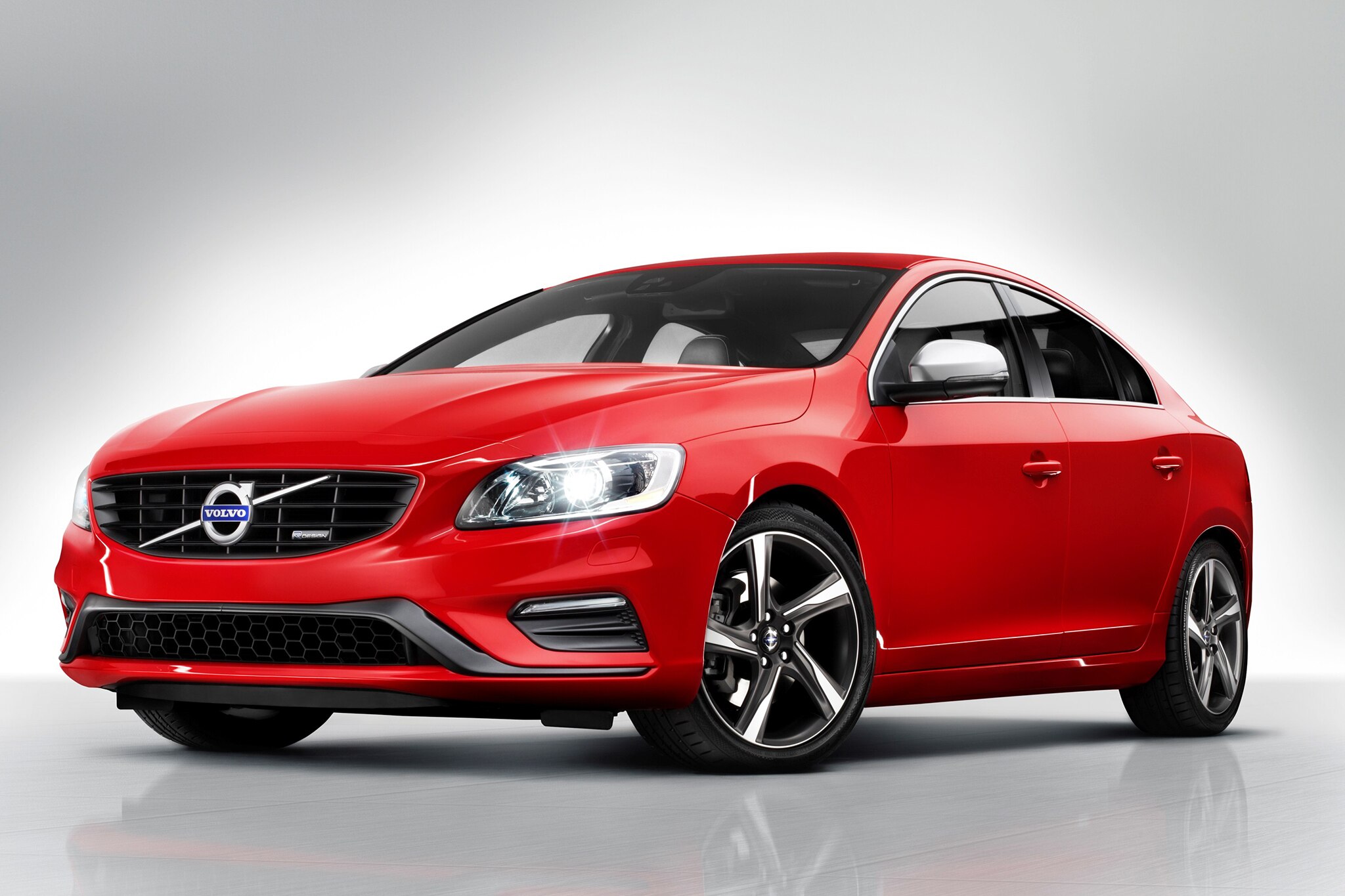
Racing Volvos. Yes They Do Race Them. In Many Guises and Types of Racing. PART TWO

 September 4, 2021

#440

Gentle reader,

This is part two in a series on Volvo racing cars. This article is about much more recent racers. If you have not read part one:

The Robb Collections: Racing Volvos. Yes They Do Race Them. In Many Guises and Types of Racing. PART ONE.

In part one, I wrote about the Australian race series called V8 Supercars. It has been going on for decades with quite a storied past. In 2013, two Volvo S60 racers were built using the 4.4 liter V8 engine built by Yamaha for use in S80 and XC90 Volvos. They raced from 2014 to the end of 2016.

For a couple more years Nissan and Mercedes continued in the series after Volvo dropped out. Here is a link to an article about what happened to the S60 race cars:

WHAT HAPPENED TO THE VOLVO V8 SUPERCARS? | V8 Sleuth

But why start with the end? OK, here is a video on YouTube about them coming to Australia:

Volvo and Polestar enters V8 Supercars for 2014 - YouTube  It starts out with historical videos of the last time they had been raced there, then shows some European racing Volvos. At the end, a hint of the upcoming cars.

Here is a link to a video about Volvo's return to racing in Australia: 

Volvo returns to racing in Australia - TouringCarTimes

Someone from Australia is referred to as an Aussie. A New Zealander is called a Kiwi after the flightless birds found only there. The best driver in the Volvos was Kiwi, Scott McLaughlin. Here is a link to an official Supercars video showing his exciting introduction to the fans at Adelaide in the first championship race of 2014:

https://www.youtube.com/watch?v=8NOZvWBp4Eo  Prior to the official 2014 season, over one weekend, there were four non-championship races in support of the F1 races in Albert Park, of which Scotty's very first win in a Volvo occurred. 

I love this shot of Scotty jumping the kerbs. That's how the English and their colonists spell curbs. Below is another view of him doing so. By the way, Canada, Australia and New Zealand, along with other smaller places are still part of Great Britain.

Like other forms of "road racing", V8 Supercars are based upon real cars. If you compare photos of street cars with the racers, it is obvious they go to great lengths to make the racers resemble the real cars.


All four doors open, as does the trunk. The lights, and windshield wiper works, they race in the rain and on street circuits as well as purpose built circuits. The longest race is 1000 kilometers, but most are much shorter with three or four over the weekend. But this is all now history.

I just found this tribute video made up from racing scenes of the two Volvo S60s:

As mentioned in part one, one of the most watched and followed, especially in Europe, races are "Touring Cars". Above is a C30 raced in the S2000 World Touring Cars Championship.
This is an S60 being raced in Touring Cars, but, I do not know which series.

"Volvo Green Racing distinguished themselves in the 2009 Swedish Touring Car Championship by winning both the driver and manufacturer's trophies. Not only that but the C30's were quickest in all qualifying sessions over the entire season, a first in the fourteen year history of the STCC. This was only the second season that Volvo campaigned the C30 in this ultra-competitive series. Polestar did a great job of preparing and fielding the two car team." Quote from IPDUSA
The C30, was, as we all know, the last of the C series of Volvo cars. That they did so well in the STCC, is a testament to Polestar's abilities to get the most out of Volvo cars for the street and the track.

For the World Touring Car Championship, American racing legend, Randy Pobst, was chosen to drive for Polestar Cyan Racing in the series.

These cars are front wheel drive and based upon street cars, unlike V8 Supercars which have spec tube chassis to which the car makers bodies are attached.

Obviously, there are aerodynamic changes to the bodies to accommodate the much wider wheels and tires as well as the full safely cage and strengthening tubing.

Here is a link to a Motor Trend magazine article about this very car: 2016 Volvo S60 Race Car: 400 HP, FWD, and Off-Throttle Anti-Lag. What Could Go Wrong?

You might recall Randy's name in American automotive magazines since he is often called upon to fully test street cars on the track.

He also is famous for racing a Tesla Model S Plaid up Pike's Peak in Colorado and winning the electric car class.

This is a link to an article about the end of an era of Touring Cars racing, specifically this car:

This Volvo S60 Race Car Is the End of an Era

For 2012, there was a new type of racing series, called: TTA Elite Racing Series. It involved all of Scandinavia and featured cars that barely resembled street cars and were in fact, MID-engine, rear-wheel-drive. The engine and transaxle were mounted longitudinally behind a firewall where the rear seat and trunk would be.

Below are a series of photographs of the Polestar's factory entry. Be prepared to see a Volvo like you have never seen before:

Looking in through the opening for the left rear door, above.
On track, cars number twelve and thirteen.

Note the dual exhaust exiting through the rear bumper.
These images are from an article I found on these bizarre cars.
Look at the huge diffuser under the bumper to let out the air channeled underneath.
I cannot imagine many actual Volvo parts on these cars.
The doors come off easily to access the driver's compartment and engine compartment. 

A later livery for the factory team cars.
Since the Volvo S60 V8 Supercars retired from racing at the end of the 2016 season, I have not been able to find any news about newer Volvos racing anywhere. Sigh.

Thank goodness for YouTube, though, one can enjoy watching Volvos in all kinds of racing series. That is except for 2015 and 2016 V8 Supercars. I did reach out to Supercars, asking them if they have and are planning to release on YouTube, those two seasons. So far, no response.

Kiwi Scotty McLaughlin, after accomplishing everything he set out to do in Supercars, winning the championship the last three years for Penske in Ford Mustangs, Penske sent him to the US to race one of his Indy cars. He has not done well, though. Yet.

Thank you SO much for taking the time to read my humble blog. I really enjoy researching and writing it. Feel free to comment below or on Facebook.

Scott
September 4, 2021
#440


Racing Volvos. Yes They Do Race Them. In Many Guises and Types of Racing. PART ONE.

 September 1, 2021

#439

Gentle reader,

As one of my readers, have you ever wondered why I address you as "Gentle"? 

In days of old, groups of people would have been addressed as, "Ladies and Gentlemen..." Such as at a carnival or other gathering where people had paid to see and/or hear something.

Well, I like the term gentle. Any new parent of newborns (or kittens and puppies) quickly learns that one must be gentle with them. Especially baby humans.

I have been called many things, most of them good, and gentle is certainly one of them. So, I treat you as I liked to be treated. With honor and respect.

That being said, let's get to the heart of this story. Volvo cars and racing of them.

As soon as man (used here as an all encompassing term) invented the wheel, no doubt two of them decided to race whatever they had put the wheels on.

I have been trying to remember the title of a comedy film about advertising, in which the main character has Volvo as a client and creates an ad something like this: Volvos, we make boring (or was it boxy?) cars. But they are good. Volvo loves it, sales take off, and I don't recall the rest of the story. Was it selling weapons? 

Anyway, Volvo are best known for making safe, strong and reliable cars. I love mine. I bought it, a 2005 V50 T5 Sport wagon in 2014. It is very rare because it has a manual transmission. To see another V50 is quite a treat. 

The "T5" stands for Turbocharged Five cylinder engine. The Sport means it is equipped with the M66 transmission, sits one inch lower than regular V50s and S40s, has stiffer suspension and came with a roof spoiler. The original buyer elected to have them leave the spoiler off. It is painted what I call, Anonymous Grey in color, not what I would have chosen. But, were I inclined to street race, one would not expect my car to be quick.

The V50 is smaller and lighter than the V70, what most people probably think of, if they think of one at all, as a Volvo wagon.

Volvo was an early adopter of turbocharging engines, way back when all their cars were rear-wheel-drive and boxy. Next they added an intercooler which cools the pressurized air before it enters the engine and it increases the engine's power. They advertised it by having INTERCOOLER* in chrome lettering across the back of the car.

I am going to show you lots of photos of Volvo race cars, because, maybe not in North America, but certainly in Europe, people have been racing Swedish cars for a very long time. 

Image courtesy of sporcle.com

That group photo of racing Volvos is just a teaser of what is to come.
* I found this photo of a 1990 760 Turbo for sale, note the INTERCOOLER emblem below the model designation.

SIDE NOTE: I may have mentioned in the past that I LOVE Australian racing and cars. The two most famous brands of cars "from the land down under" are Holden which is a GM (General Motors) brand and Ford. 

Ford was the first to import cars from Australia to the United States and we owned one, it was built in May, 1990 and sold to the original owner in June of that year. We bought it twenty years later with only 84,000 miles on it. That's 4,200 miles a YEAR.
We had many a, "What kind of car is that?" questions, our answer, "An Australian Ford."
Designed in Italy, built in Australia with Japanese chassis and drivetrain. 
The same engine as in it's main competitor, the Mazda MX5/Miata. In the case of our car, an XR2, it was turbocharged. It was sold here from 1990 to 1994 as a Mercury Capri.

GM was next, importing the Holden Monaro coupe to here as a 2004 to 2006 reborn Pontiac GTO. I want one! They made other GM cars from Holden Commodores as well.

"But, what does that have to do with racing Volvos?", you may be thinking. 
Let me answer you.
This. 
Ford and Holden, until they closed their plants this decade, continued to make "American" style cars: large, rear-wheel-drive with either straight six cylinder or large V8 engines. Sedans, coupes, estates (wagons) and Utes (think Ford Ranchero and Chevy El Camino of old). And that is what they raced in "Australian V8 Supercars": Holden Commodores and Ford Falcons. Four door sedans. ALL four doors opened, they have working lights and a windshield wiper. To me, they are what NASCAR should be. They race in the rain, on street circuits and purpose built tracks. Races short and long, up to 1000 kilometers. And Aussies are crazy about car racing.

In 2012, they came up with a new chassis for the racing series and invited other car makers to come race. Nissan and Mercedes Benz accepted first, with Volvo following the next year.

While Nissan did not make rear wheel drive sedans with V8 engines, they did (and do) make rear wheel drive V6 sports cars and pickup trucks and SUVs with their DOHC 16 Valve V8 engines driving the rear or all wheels. Mercedes builds only rear or all-wheel-drive cars and trucks. So, building a Supercars racer was easier for them.

Nissan and Volvo (who did sell their S80 sedan and the XC90  SUV) with a Yamaha-built DOHC 16 Valve V8 engines but they were front or all-wheel-drive with the engines sitting transverse, or side-to-side. Unlike Ford, Holden and Mercedes Benz with traditional longitudinal or front-to-back engines driving the rear wheels.

This is a Facebook friend's XC90 engine, the Yamaha-built 4.4 liter DOHC 16 valve V8 engine, mounted transverse.
And here is what POLESTAR*, Volvo's performance division, created for V8 Supercars, to be mounted longitudinally  in a Volvo S60 four-door sedan body mounted on the spec V8 Supercars new chassis, driving the rear wheels through a six-speed sequential transmission. All V8 Supercars uses that kind of fuel injection setup. *You will see more of Polestar cars in the next chapter.

There were two V8 Supercars Volvo race cars and drivers. Scott McLaughlin, an up and coming New Zealander drove #33 and a couple of other fellows, one a Swede, drove #34. They only raced in 2014 and 2015. "Scotty" as he is called did very well and later won the championship three years in a row: 2018, 2019 and 2020 for Penske racing.

Unlike V8 Supercars, one of the most watched form of racing in Europe anyway, is Touring Car Championship racing. They are most relatable to the fans because the race cars are modified STREET cars. NASCAR used to be that way. The cars on track look JUST like the one you drove into the parking lot at the track.

And now, some older Volvo race cars. I am no expert in Volvo models, especially older ones. So bear with me if I get a model number wrong.

Top, a 544, I believe, racing at the Goodwood Festival of Speed in England recently. 
Above, a P1800 sports coupe converted to racing duties, here in the U.S. 

Above, racing in Touring Cars somewhere in Europe. I do not know anything about the two drivers shown.

Here is a link to a website with videos of their Rally Racing old Volvo: Flying Moose Rally Team | Volvo Group 2 | Flint, Michigan

One of two matching 850 Estates (what we call wagons or station wagons) racing in the British Touring Car Championship. Tom Walkinshaw Racing read the rules carefully and was able to make legal changes to their five cylinder engines to make them more powerful, AND to make racing wagons instead of sedans (which they call saloon cars), because the rules said nothing about not racing estate cars.

Here is a link to a web site about the 850 BTCC race cars: Legendary Volvo Racing 850 BTCC Cars & Engines

I am not sure where this S40, which were the late 1990's to early 2000's Volvo compact cars, the wagons were called V40, was being raced. Touring car racing for sure, though.

I recognize the name Rydell, so I know that this early 2000's S60 sedan was raced in the BTCC
I do not know where this S60 or S80 is or was being raced.
American legend Randy Pobst racing his K-PAX S60 here in the United States. 

Here is a link to Randy's latest Volvo race car, a 740: Flying Moose Archives - Garage Heroes (In Training)  And here is a link to a YouTube video of Randy and his team making a humble 740 into a race winning car: Volvo Rebirth.. The Flyin' Moose - YouTube
Based upon the registry number plate, this car is somewhere in Europe.


Another 544, this one being rally raced, fairly recently too.

This Volvo Amazon wearing Gulf Racing Livery (paint schemes are called livery) racing somewhere in Australia, possibly in a rally.
Another Touring Car Championship car, I believe it too was in the BTCC. Here is a link to an article about restoring this important Volvo racer: Volvo 240 Turbo Group A

And here is a link to an article from which some of the photos above were culled, which explains their significance and segues into part two: A look at Volvo's six factory touring cars - TouringCarTimes

For more fabulous photos of Volvo race cars, look here:

And that is IT for part one. There is MUCH to come when it comes to what is being raced much more recently and these days in part two.

Thank you so much for reading my humble blog. I greatly appreciate your kind words and comments, either below or on Facebook.

Scott
September 1, 2021
#439

I've Heard of Cornhole, the Beanbag Tossing Game, But Corn Bulbs? LEDs Have Changed Lighting Forever.

August 28, 2021

#438

Gentle reader,

In 1982, I went to work for the Washington, D.C. subway company whose acronym is WMATA, short for Washington Metro Area Transit Authority. metro for short. They do not capitalize the m.

During propulsion and braking class, I asked the instructor how LEDs worked. "F.M." "Frequency modulation?" "No, f___ing magic, I don't know how they work." OK, then.

For the purpose of this article, I will not explain it, it's pretty cool, but they went largely unchanged for almost 100 years before engineers started experimenting with making their illuminations brighter.

You are no doubt familiar with the curly-cue compact florescent light "bulbs" which were the first answer to the U.S. Government's order to reduce the wasted energy conventional Tungsten light bulbs produced. Remember the toy Easy Bake Oven? It used a 100 watt light bulb which gets hot enough to actually cook the little cakes. Between 2.5% and 5% of the electricity is converted to light, the rest is wasted as heat.

The main problem, and there were many, with CFL bulbs, and all florescent lighting, is that they need a small amount of the poisonous liquid metal called Mercury to work. Thus, used up bulbs and tubes are hazardous materials and cannot legally be thrown out.

Lighting engineers figured out how to get LEDs to produce more light, but they then also produced heat. Not nearly as much as traditional bulbs, though. So, the first LED bulbs had expensive and somewhat heavy aluminum finned heat sinks to dissipate the heat. 

As time went by, they eliminated that problem in several ways. Also, LEDs do not emit light in all directions like regular and CFL bulbs do. Again, they overcame that problem too.

Some, mostly Asian, lighting engineers came up with a unique way to get their LED bulbs emitting 360 degrees. See below:

Their answer was using many bright LEDs in rows the full circumference of the body with some on the end as well. And they work.
My first dipping of a toe into the corn bulb waters was buying the four on the left. They were found on Amazon, marketed as "100 watt equivalent". When they got here, first, they are small, and second, they do not emit nearly that much light, singly, anyway.
So, I made this setup using four ceramic covered lightbulb sockets I had saved from a removed bathroom fixture. I mounted them on the circular flat piece of steel shown.

I have been trained in working with electricity, so know what I am doing. Do not, EVER, try and work on things that use electricity. It can and will KILL you!
The ceramic insulating covers over the metal lightbulb sockets are there because the bulbs get hot, especially if there are multiple ones.
So, why did I want a corn bulb? I had found a photography light stand with an attached collapsible square reflective umbrella at a thrift store.

This is not it, exactly, the photo I did find would not open for this purpose. But you will see it below.

Traditionally, they used large and hot tungsten lightbulbs. However the cord on this setup is very thin, and thus would overheat and possibly catch fire using anything but LED bulbs. 

When I tried a good LED bulb, like the one on the left (this is an excellent photo of an early LED bulb with finned aluminum heatsink, which I just found online) you see that only the front hemisphere of the bulb is lit. Thus no light comes from the rear portion of the bulb to bounce off the reflective surface of the light umbrella.

Very clever photographic editing here, I wish I had that kind of talent. LED on the left, conventional tungsten bulb in the middle and a typical CFL bulb on the right. All with no visible means of support or electricity.

Using this photo again, the smallest corn bulb is supposed to emit the equivalent of what a traditional tungsten 100 watt bulb would put out. The next one is "Rated" at 200 watts and the one on the right, 300 watts. Prior to buying the big ones, I made the fixture and just holding it lit up inside the umbrella, it still did not produce enough light. SO, I bought first the 200 then the 300.

Here is the 200 watt equivalent corn bulb mounted inside the reflective umbrella.
And here it is lit up. Nice, white light. Each of these big corn bulbs came from different factories.
And above and below is the 300 watt equivalent bulb, not it has some blueness to it's light.
Since, as mentioned, I had no way to mount the "400 watt" cluster of corn bulbs inside the umbrella, here they are, below, lit up. Also, a nice white light is emitted.

Now, the way lights "Color" is rated is based upon: "Black Body" Kelvin degrees of light measurement. Here is a link, coincidentally from my alma mater, Virginia Commonwealth University, to explain:

Electromagnetic Spectrum; Kelvin Scale; Speed of Light; Additive Color Theory

Basically, a theoretical "Black Box" or object, heated up until glowing, with the resultant colors emitted at each increase in heating up into thousands of degrees Kelvin is how light sources are rated. "Warm" bulbs are only a between one and two thousand degrees K, while "Daylight" bulb are between 5000 and 6000 K.

I decided the 300 watt equivalent corn bulb would do the trick to provide me enough light for my needs. So, what to do with the others?

This house has two bathrooms, one upstairs, the other downstairs. But, it had a little passageway from the master bedroom to the upstairs bathroom. I removed what was there and made it a storage alcove. The four light sockets came from an identical fixture as this one in said bathrooms. The shot above, with the lights off and flash used. Note the four traditional bulbs we bought by mistake thinking that they were inexpensive LED bulbs. Tsk, tsk.
These two photos do not due these small corn bulbs justice. The bathroom is REALLY bright now!
For the remaining 200 watt corn bulb, I removed the LED bulb which was there and put it into the three-bulb overhead fixture I had installed in this very room, the one pointing towards where I am sitting now.

Every Sunday afternoon, at five, my mother and all four of my siblings get onto an hour long Zoom call. It is wonderful, Mom is 88, and we are spread about the country so it is a great chance to get to know each other better and catch up. We have never run out of things to talk about and I highly recommend doing so with your loved ones if you have the capability. 

I believe that 200 watt equivalent corn bulb will light me up "right well" as we here in the South sometimes say.

For your edification and education, here are a number of different types of corn bulbs I found doing research for this article:


Each are their engineers idea of what a corn bulb should look like. The one that folds open is pretty clever. And the ones which have little fans inside are cool, too. Get it? They are cooled.

I hope you enjoyed reading my humble blog. I enjoy writing and your kind words or comments below or on Facebook are always wonderful to read.

Scott

August 28, 2021

#438

Worn-Away 1976 Fifty-Year-Old Snap-On™ Tools Bicentennial Key Chain Plus

  June 1, 2026 #543 Gentle reader, As the United States of America heads to it's Semiquincentennial in one month and three days from thi...