Panasonic Lumix FZ200 Superzoom Camera Goes Wider and Longer. 19-1020mm!

July 12, 2019
#318

Gentle reader,

By now, you are well aware of my love for Panasonic LUMIX cameras and their superb LEICA lenses.
I visited my 86-year-old mother this week. So good to see her! Anyway, she was trying to convince me (as is my wife) to get a "smart" phone. Mom, "At least for the camera." "But I always have a camera, see?" as I pulled out my LUMIX ZS15. "Oh, wait a minute." She got up and walked over to her hall table, "I have one like that." She handed me this pretty blue LUMIX FH25.
I offered to sell it for her since I had no need for it. Although it is probably the most pocketable camera LUMIX makes. Here's the cool thing, it has only made 330 photos! If you are interested, you can find it here: rfcollectin on eBay

I previously extolled my new-to-me LUMIX FZ200 camera here:

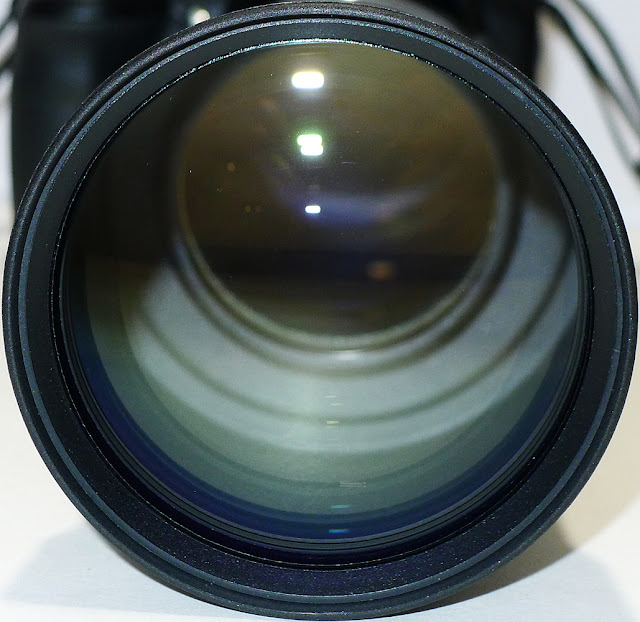
In reading the manual, I saw the many accessories that they made for it. One struck me as particularly useful, the DMW-LT55 telephoto lens which stretches the already impressive 600mm reach to the astounding 1020mm! 
Being that it is a Panasonic lens, made in Japan and fully coated, I wanted one. But the prices even for used ones were too steep for me.
However, my seemingly continual ability to get on eBay at the EXACT time a bargain has been listed still held. I saw a newly listed one for only $114 and jumped on it. I bought a new adapter for it as well for less than $30.
On the right is the wide angle lens for the LX5 which works dandy on this as well, as you will see.

From Panasonic's page about this lens:
"Tele Conversion Lens Shoots at 1.7x magnification with F4.0 brightness. Compared with the 1.5x optional tele conversion lens (DMW-LTZ10) of the DMC-FZ20, this model is about half the size and less than half the weight. Enjoy remarkably clear, vivid, expressive shots of distant objects, with even greater power and dynamism from your 24x zoom." 
The whole kit.

Nothing about the construction of the lens on their web site. But it has at least four elements and they are fully coated. With the 1.7X conversion, it surpasses ONE METER, 1020mm to be exact. Plus, it came with both caps and the storage bag with it's little Panasonic label.

Above, the lens zoomed out to 600mm (35mm equivalent).
Here are some views of the lens and adapter in place on the camera.

Four reflections and different colors.
Today, I mounted the camera on my vintage REDITILT® SUPER all aluminum tripod. I made three images seen below.
25mm image above.
 600mm image above.
1020mm image above.
As mentioned in the title, this camera can also go wider than the 25mm minimum. By installing my DMW-LWA52 I purchased (also at a bargain price) for my LX5 camera.
It threads right into the front of the lens and widens it to 18.75mm.
One thing my LX5 does well is show every little speck of dust on things! I just noticed that there are seven or more reflections, some from the camera's lens. The colors show the coatings.

25mm above, 18.75mm below.
Some curvature can be seen on the shelf's front edge. The edges of the image are a little soft. An 18mm lens would be sharper, but the fact that the lens works (and I already have it) is the ticket for me.

The wall is opposite my desk. There used to be several 8x10 framed photos from my film days in those blank spaces. But I removed them all (only a fraction were on display) and put them in sleeves in a binder. Most had been in boxes in the attic since 2001. I intend to scan many of them and other favorites. 

I am very happy with the FZ200. There is no apparent shutter lag that the G1 and GX1 seemed to have. 

Another reason I sold them, and all the I'd bought for them, is that I have a Nikon D200 and several lenses that have sat unused in the camera bag ever since I got into LUMIX cameras. No shutter lag with it! But boy is it big and heavy!
Here it is in comparison to the D70s it replaced. 

So, that's it for now. I hope you have enjoyed reading my humble words and viewing my images. It is your kind words and comments that inspire me to keep creating new articles.

Scott
July 12, 2019
#318

How Large, Heavy and Costly Would a Leica 25-600mm Zoom Lens Be?

July 4, 2019
#317
Gentle reader,
If you are in the United States of America, as I am, Happy 4th of July! The day we celebrate our independence (despite who's "in charge") and the day dogs freak out from the fireworks.

NOTE: If you are viewing this on a computer, clicking on any picture will open a second window over this one. You can click through or use your right and left arrow keys on your keyboard to view all the photos. They will be larger than seen here. If you are viewing it on a device such as a phone or tablet, I do not know if that works the same way. I don't use them.
If you are wealthy then the cost of things are of no concern to you. But to the rest of the world, stretching our money is vitally important.
I, at age 39 in 1985, bought my first 35mm SLR camera for $100 including a 50mm lens and generic flash. As time went by and eBay was founded, I began buying and collecting vintage cameras and lenses. Eventually having over 400.

Below are two 35mm SLR film cameras with sets of lenses I bought and/or adapted for them:
Above is a Sears branded Ricoh camera. It's lenses thread (screw) on and off. It's fastest shutter speed is 1/2000th of a second. While it has a lightmeter inside, it is a strictly manual camera. The physically largest and heaviest lenses I have owned are in the case. Top left is a Chinon 55-300mm f3.5 lens. Bottom left is I believe a 400mm telephoto and top right is a 500mm telephoto mirror lens. I labeled all the lens caps to quickly determine what each lens was. OCD has it's good points.
Some years later, I bought my first Nikon camera. Actually a Nikomat* ELW which was the last of the Nikkormat* line of budget Nikon cameras.  

*Sold in North America as Nikkormat, in the rest of the world as Nikomat.

The same case as before, some of the lenses are the same. Top left is a 100-500mm zoom lens. Bottom left is the Chinon 55-300mm lens. 
"So where am I going with all this, you may be thinking." I'm glad you asked. 
Suppose you could buy, for a very reasonable price, a genuine Leica zoom lens which not only zoomed from 25mm wide angle to 600mm super-telephoto, BUT also has a CONSTANT APERTURE of f2.8? Yes, not a variable aperture lens, wide open f2.8 from one end of it's range to the other! 
Just how big and heavy would this lens have to be? The heaviest one I owned was that Chinon 55-300mm. So heavy, I had to use a tripod, all the metal and glass was too much to handhold for long.
Now remember, this a LEICA lens, made by the German camera company famous the world over for it's quality engineering, construction and functionality. 
To my knowledge, no such interchangeable lens exists. The one at the very top of the page is a Tamron 200-400mm lens with it's shade attached. It is mounted on my Panasonic Lumix G1 Micro Four Thirds mirrorless camera via a Nikon F to M4/3 adapter.  Pretty impressive looking though, isn't it? Here it is again:
Leica DOES make a large, long and expensive lens which is made for Panasonic Lumix and Olympus M4/3 cameras, here is an image of one:
I found this image on the Internet. It is mounted on the top-of-the-line current Lumix M4/3 camera. The lens is over $2000. But, it is only a telephoto lens: 100-400mm. And it is variable aperture, f4.0 at 100mm f6.3 at 400mm. F6.3 is the dimmest light that most autofocus cameras can work with. To be constant f2.8 it would be nearly three feet long and almost one foot in diameter at the fat end! And I cannot image how heavy!

The key to weight and size reduction in lenses is what size "image circle" the lens must produce. 35mm film requires at the minimum a 43mm wide circle. 

The smaller the film surface or sensor size, the smaller and lighter the lenses can be made.
"So what the heck are you going on about?" Again, I'm glad you asked. The lens I have been describing comes from the Panasonic factory mounted on either a 12.1 or 16.1 megapixel digital camera. Called either a FZ200 or FZ60. The latter is 16.1 Megapixels but has fewer features and costs less than the FZ200. Now, these are 2012 model cameras.  
Panasonic has made newer and better ones and if you have the money, go an buy one. 
The VERY reason I switched to LUMIX cameras is because so many of them come with genuine Leica lenses. The FZ200 is my 13th purchased so far.

Here is an excellent web site which reviewed the camera and explains all about it:
Panasonic Lumix DMC-FZ200 Review: Digital Photography Review 
It is the one on the right. The camera I made most of these images with, is on the left. It is a DMC-LX5. It's Leica lens is called "Vario-Summicron" it is variable aperture: f2-3.3 and is (35mm equivalent) 24-90mm.

The FZ200 was the first new LUMIX camera to feature a fixed aperture lens in many years, according to the article linked above.  It's lens is called "Vario-Elmarit". As far as Leica lenses, the ones with "Summ-" in the name are the top models.
This case I originally bought for my first "bridge" camera, a Fujifilm Finepix S7000 many years ago. It pales by comparison to this FZ200. Laughably so.

I have been fortunate many times to be on eBay at the right time to find bargain prices on exactly what I was looking for. The Panasonic FL360 flash and that lens on the right, a Panasonic DMW-LWA52 which is made for the LX5, it widens it from 24mm to a 18mm.  It costs many hundreds of dollars new and are usually almost $300 used. The flash is also in that price range, I got lucky on both, paying a fraction of that for each.

The FZ200 has 52mm filter threads and readily accepts that DMW-LWA52 lens making it's range expand to 18.75mm wide angle from 25mm. 

Below are test shots I made with it attached and not.
Above is the widest the lens goes: 25mm. Below is with the DMW-LWA52 attached. FL360 flash used in both cases.
A little soft on the edges, but that's OK, it's not some cheap screw on "fisheye" lens which aren't worth the cost of a postage stamp. 
Here are shots of it attached to the FZ200. Note printed on the camera's lens body above: F2.8 25-600mm 
The camera's lens features "NANO SURFACE COATING" and it is stabilized so that one can make 600mm shots handheld! I love this camera!
The business end of the DMW-LWA52 18mm lens.
SO, what prompted me to buy a seven-year-old camera when I already have a nice Nikon DSLR with a passel of lenses and LUMIX G1 and GX1 micro four thirds mirrorless camera bodies?

Lenses, that's what. Being retired and on a fixed income, I cannot afford any Leica lenses like the 100-400mm I showed you or any of the other Leica, Olympus, Panasonic or other brands of lenses made for these wonderful M4/3 mirrorless cameras. AND all but the most expensive models are variable aperture lenses. 

Above are the TWO lenses I could afford: Panasonic's 14-42mm and 45-150mm. They are good, but not Leica lenses. OK, I had briefly an Olympus 9mm "fisheye" lens. It was all plastic and in fact was not a fisheye lens but merely a 18mm equivalent wide angle. And it was manual focus. 
You may be thinking, "But that bridge camera has a much smaller sensor that M4/3 cameras." And you are correct. Again the word is LENSES. Sharp lenses like ones made by Leica.
Just LOOK how sharp this photo is! And it was made by a pocket camera, the LUMIX DMC-ZS15, an image of one is below:
This image I found on line, I have not written about this camera. But look, a Leica lens. F3.3-5.9. 35mm equivalent is 24-384mm. AND, the sensor it has is way smaller than the FZ200 has!
 
Larger pixels and greater counts are fine, but if all you can print is up to 8 1/2 by eleven inches, all you need for that is 6 megapixels. The rest of the pixels are wasted, so to speak.
Not that I shoot video, yet, but the G1 does not offer that ability. The GX1 does, but it and all my M4/3 equipment is for sale on eBay right now, rfcollectin on eBay so that point is moot. I'm selling for bargain prices! Please take a look.
Look at how much larger the FZ200's lens glass and barrel is in comparison, size equals speed in lenses. Larger apertures equate to being able to use faster shutter speeds. And the one on the right is at the 600mm end in these shots. The G1's lens only reaches 1/4 of that at 150mm. Think how long it would have to be to reach 600mm!
The shapes and functions of the two are very much the same. It makes it easy to transition to a newer camera if there is consistency in design.
Both have the same size LCD screen, but the FZ200's has far more resolution as does the electronic viewfinder than the G1.
The G1 and GX1 and now the FZ200 are the first cameras I've owned which have rotating LCD screens which greatly improve the ability to capture images. Just think of the possibilities!
Those areas in front of the hot shoe (flash mount socket) on the FZ200 are it's stereo microphones for HD video recording.

There it is in black and white: f2.8/4.5-108mm which equates to 25-600mm in 35mm or full-frame sensors.

It arrived just yesterday, so I really haven't been able to play with it much. Oh, but I will!

Thank you once again for taking the time to read my humble words and view my images. Your kind words and comments greatly encourage me to keep shooting and writing.

Scott
July 4, 2019
#317 

The Joy of Harmony. Logitech Harmony Remote Controls Solve All Problems.

June 26, 2019
#316

Gentle reader,

How many remote controls clutter the various rooms with devices designed for your entertainment do you have?

In our bedroom, we have a small flat screen TV our daughter bought for us a few years ago. Attached to it are: A Blu Ray player, a Roku streaming stick, an HDMI switch and a Verizon Fios non-HD cable box. And a row of five remote controls. It's no wonder we almost never have any of it on.

NOTE: If you are viewing this on a computer, clicking on any picture will open a second window over this one. You can click through or use your right and left arrow keys to look at the photos. They will be larger than seen here. If you are viewing it on a device such as a phone or tablet, I do not know if that works the same way.
Do you see all of the components on the shelves above? You'd think one would need a plethora of different remote controls to operate all of them. You would be correct. And incorrect.
This is the very first Logitech Harmony remote control I ever had. My ever-thoughtful daughter (the same one that bought the bedroom TV) bought it for me some years ago. It is a model 650. 
At first I wasn't seeing the need for it. I mean, we had all the remotes for the entertainment devices, all in a wooden holder made for them. But that was in the living room. However, as I came across and bought obscure stereo components for my listening room system, I realized it might be JUST what I needed.

Now, "universal" remote controls have been around for many years. In the beginning, one had to look at the long list of manufacturers on the instruction sheet and try EACH code number listed under that brand, keying each number in, until finally finding the one code number that gave a response from the: TV, VCR, Cable Box, etcetera. That process had to be repeated for EACH device! What a pain in the fingers! And don't lose your place in the list. You'll have to start all over.

As more and more electronics which utilize remote controls were introduced, it soon became clear that no direction sheet list could ever keep up. Something had to be done.

Logitech (a company I do and have owned a number of products from, but with which I am NOT associated in any fashion) came up with the answer. 

Their idea: Universal remote controls with which one can DOWNLOAD the codes from their web site directly into the remote via a USB cable. Brilliant! One chooses the brand, the type of device, the model number and hit's enter. Then once all components are entered, you answer questions Logitech asks regarding your preferences for each devices usage. Then all that information is downloaded right into the remote. You are instructed to test each thing and then hook it back up via the USB cable to confirm all is well, or correct what is not. It's easy.

They have been able to gather ALL of the remote control codes for hundreds of thousands of components from countless manufacturers. They are all readily available via their site, accessed with the application for each Harmony remote they have made.
The same photo as above, but smaller. I have components from: 1990's Dynaco (out of business), OPPO, TDK (I didn't even know they made components) Nakamichi, Adcom and JVC. Plus the Denon turntable and a few other things which do not use remote controls. 

There was no way that I could find a remote control for the TDK dual-tray CD recorder (I was able to download and print out the manual, to my delight) or for the Nakamichi CD changer. Fortunately for me, soon after the very rare Dynaco (top right) PAT-6 preamplifier arrived, another seller on eBay listed the owner's manual and remote control for it. But I PAID dearly for them, knowing full well that I'd never see another of either. The OPPO universal player came with a remote. But I don't use it, I don't need to. Not since I put Harmony to work.
This remote does not have a touch screen nor rechargeable batteries. It is designed and laid out so that all functions used by any of the factory remotes provided to the original buyers of the equipment, are duplicated by it.

The numbers on the remote's screen above: "1/9" are page numbers. You use the left and right arrows below the screen to flip through the screen's pages and the four buttons adjacent to the screen's four labeled squares are pressed to activate each item. They are things that are special and for which a button is not included on the remote.
The buttons are logically laid out (they ARE named Logitech) and easily read so that one can quickly find and activate each. 
I have been happily using this remote control for years and come to think of it, the first set of batteries are still viable.

Next, let's take a look at the living room's audio/visual equipment from four different manufacturers.
The HDTV (not shown) is an LG unit. A Samsung smart Blu Ray player is next, I added those feet to it as the Motorola Verizon cable box below it gets warm whether it's on or not. At the bottom is a SONY home theater receiver.

The tasks of the Harmony ONE remote (below) are far more complex than the model 650 remote's are. 
This is the newest and most complex of our family of Logitech Harmony remote controls. It does have a touch screen and based upon the fingerprints by the OFF button, it gets used often.
Watch TV. Seems simple enough. However, the remote must: Turn on the Motorola cable box. Turn on the LG HDTV. And assure that the Input on said TV is set to the correct HDMI input from the cable box.

Watch A Movie has even more complicated requirements. It must: Turn on the SONY receiver and make sure the receiver's input is set to the output from the Blu Ray player. In this case, LD/DVD Digital Coaxial input. Turn on the LG HDTV and choose the correct HDMI input from the Samsung Blu Ray player. Turn on the Samsung player and examine it to see if it has a disc loaded. 
Caveat, there is one thing this remote does not do that the factory Samsung remote does, at least, I haven't found it yet: When streaming with the player, it's return button, located below the channel +/- buttons, does not take one back to the previous screen. Perhaps newer ones do. That's the only time I reach for an original remote.

This remote has a charging platform and rechargeable batteries. It has performed flawlessly.

Next, let's go down to the family room, one room that is almost never used since all the kids stopped moving back in. All of the equipment is older down there.

Our first flat screen TV, a Samsung, which is actually a monitor, as no TV tuner is built in, is seen below. The single HDMI input stopped working some years ago. So it is strictly analog audio and video inputs.
The wide black object below the TV is a very early soundbar. Made by Pioneer, it has a separate subwoofer with a ten inch driver and amplifier in the sub's cabinet. They were a thrift store find and use two separate cables to tie them together, one of which was missing. Pioneer was the only place that had the missing one. I paid more for that cable than the rest of the components. It's face can be seen below:
Below, something most homes do not have, a VCR, this one a good one with six heads. The more heads, the better the picture and sound. It also plays DVDs. Is a remote control available for either of these devices? Not on your life.
 Atop the RCA unit is one of Verizon Fios' non-HD cable boxes. I added those feet too. Makes it look like it could go off road, or take off like a drone.
This Logitech Harmony remote is a model 890. It is in the middle of the age range of the three we own. It too has a touch screen and charging cradle and rechargeable batteries.
See that it has THREE choices of activities. The RCA DVD/VCR has two sets of outputs, one for the DVD and one for the VCR. The Samsung HDTV has several analog audio and video inputs to accommodate various devices that might be vying for your viewing/hearing attention.

The remote's tasks are as complicated as the one in the living room. Since the sound bar has built-in amplification, there is no receiver. The remote control must: Turn on the TV, turn on the cable box (if that is one's desired source) and choose the correct input on the TV for the output from the cable box or the RCA player. In this case, the remote's volume switches controls the TV's volume.
For watching either the DVD or VCR, it must: Turn on the Pioneer sound bar, turn on the RCA player, choose which player is to be played. Turn on the TV and choose the correct input for whichever format of recording is to be played, and once all that is done, control the various devices. 

Again, it does it flawlessly. One's only responsibility is that the remote remains aimed at the electronics until each is on and set to the proper everything.  

It works and boy do they make it easy on my wife who resorted to making labels for each remote control as to what they are for and she still gets confused sometimes. So, I patiently point out the Logitech Harmony remote and it's screen choices. "Ah, well that's a lot easier."

And like the "Hokie Pokie", that's what it's all about. (If you don't know what that is, do a search. It'll date this author, but I don't care.)

While I would love it if I got a kickback from Logitech for every remote that you buy as a result of reading this article, that is not the case. Sigh.
No, I am merely doing my civic duty passing on what I have learned by buying and using these wonderful remotes. 

It is still up to you to OT lose the remote, regardless of who made it.

Thank you SO much for taking the time to read my humble words and viewing my images. Your kind words and comments are what keeps me putting out these articles.

Scott
June 26, 2019
#316


Super Rare December, 1975 24 Page Full Color Dynaco Dynakit Products Catalog!

  September 17, 2026 #552 Gentle reader, For those that are new to this blog: Welcome! I write about Nancy's and my passions, and no, no...